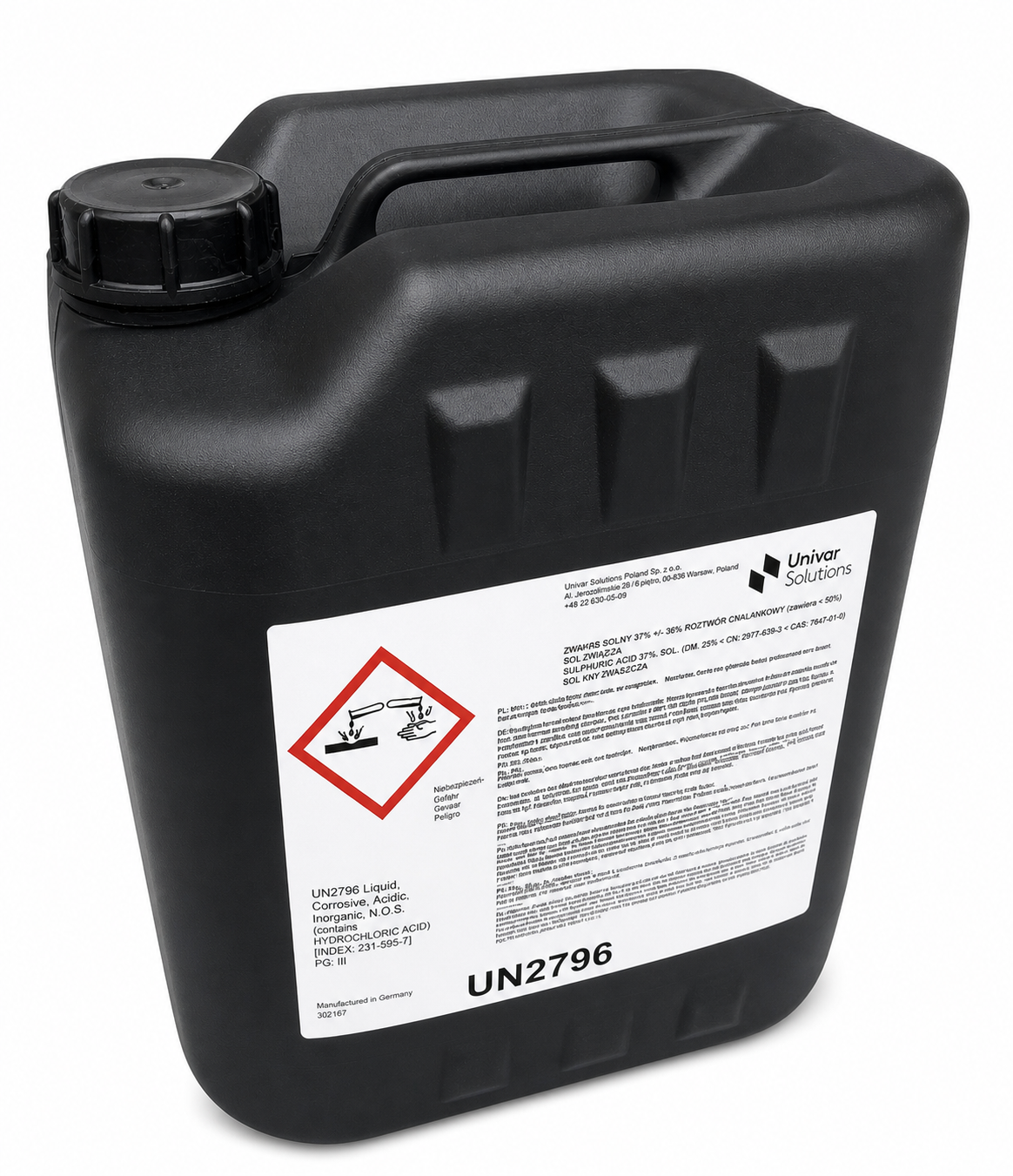
What This Chemical Is
UN2796 – Hydrochloric Acid–based pool acid Used for:
Lowering pH
Lowering Total Alkalinity (TA)
Cleaning scale or mineral deposits (when diluted)
Hazards:
Corrosive to skin, eyes, metals
Produces irritating fumes
Reacts strongly with chlorine products (never mix)
📘 Safe Use Instructions for Pools
Below is a structured, step‑by‑step guide using the technical template.
1
Test Pool Water First
Start Here
Correct dosing depends on accurate pH and alkalinity readings.
Use a reliable test kit or digital meter
Record pH, Total Alkalinity, and chlorine levels
Ideal pH: 7.2–7.6
Ideal TA: 80–120 ppm
2
Calculate the Required Acid Dose
Recommended
Determine how much acid is needed to reach the target pH or alkalinity.
General guideline: For a 10,000 L pool, 100–200 mL of 30–33% HCl typically lowers pH by ~0.2–0.3 units. (Adjust based on test results.)
Use a dosing chart or pool‑calculator app
Never exceed 500 mL per 10,000 L in one addition
For large corrections, treat in multiple small doses
3
Prepare for Safe Handling
Safety
Hydrochloric acid is corrosive and must be handled with proper protection.
Wear gloves, goggles, and long sleeves
Work in a well‑ventilated outdoor area
Keep away from chlorine, shock, and metals
Never breathe fumes
4
Dilute the Acid Before Adding
Important
Dilution reduces risk of splashing and improves distribution in the pool.
Always add acid to water, NEVER water to acid.
Fill a plastic bucket with clean pool water
Slowly pour the measured acid into the bucket
Stir gently with a plastic tool
5
Add the Acid to the Pool
Apply the diluted acid safely to avoid damage to surfaces.
Walk around the deep end while pouring slowly
Keep the stream close to the water surface
Avoid adding near steps, skimmers, or metal fixtures
Run the pump for 30–60 minutes after dosing
6
Retest and Adjust
Ensure the water reaches the correct balance.
Retest pH and TA after 1–2 hours
Add more acid only if needed
Maintain pH between 7.2–7.6 for swimmer comfort and equipment protection
7
Storage and Disposal
Hazard
Improper storage can cause dangerous reactions or container damage.
Store upright in a cool, dry, ventilated area
Keep away from chlorine, metals, and heat
Never store in metal containers
Rinse empty containers with plenty of water before disposal (follow local regulations)
🧼 Additional Chemical Information (Client‑Friendly)
What Hydrochloric Acid Does in a Pool
Lowers pH when water becomes too alkaline
Reduces Total Alkalinity when levels are high
Helps prevent:
Scale formation
Cloudy water
Inefficient chlorine performance
When to Use It
pH above 7.8
TA above 120 ppm
After adding alkaline products (e.g., sodium bicarbonate)
When scale or mineral deposits appear
When NOT to Use It
pH already below 7.2
TA below 80 ppm
Immediately after adding chlorine or shock
Near metal fittings or heaters